
Carpenter Bees Control
Xylocopa
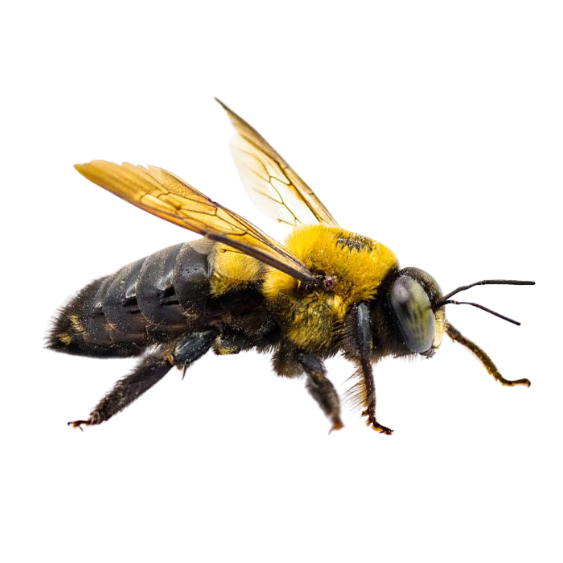
Carpenter bees are large, solitary bees that bore into wood to create galleries for nesting. They resemble bumblebees but have shiny, hairless abdomens.
How to Identify Carpenter Bees
Proper identification is the first step in effective pest control. Carpenter Bees have distinct physical characteristics and behaviors that help distinguish them from other common household pests. Look for these key identifiers:
- Large, robust bees (1/2 to 1 inch long)
- Shiny, black, hairless abdomen (unlike fuzzy bumblebees)
- Hover around eaves, decks, and wooden structures
- Leave perfectly round, 1/2-inch holes in wood
Are Carpenter Bees Dangerous?
Female carpenter bees can sting but rarely do unless handled. The main danger is structural damage. Over time, their nesting galleries can weaken wood, and woodpeckers may further damage the wood to eat the bee larvae.
Why Do I Have Carpenter Bees?
They prefer unpainted, weathered softwoods like cedar, redwood, pine, and cypress for nesting.
How to Prevent Carpenter Bees
While professional treatment is often necessary for an active infestation, you can take proactive steps to make your property less attractive to Carpenter Bees:
Need Help With Carpenter Bees?
Don't let carpenter bees take over your home. Our local experts are ready to provide a thorough inspection and customized treatment plan.
- Locally Owned & Operated
- Thorough Inspections
- Guaranteed Results
Let Us Take Pests Off Your Mind.
Experience the Amerimax difference: a local team that shows up, listens, and follows through. Get a premium solution for your carpenter bees problem today.