
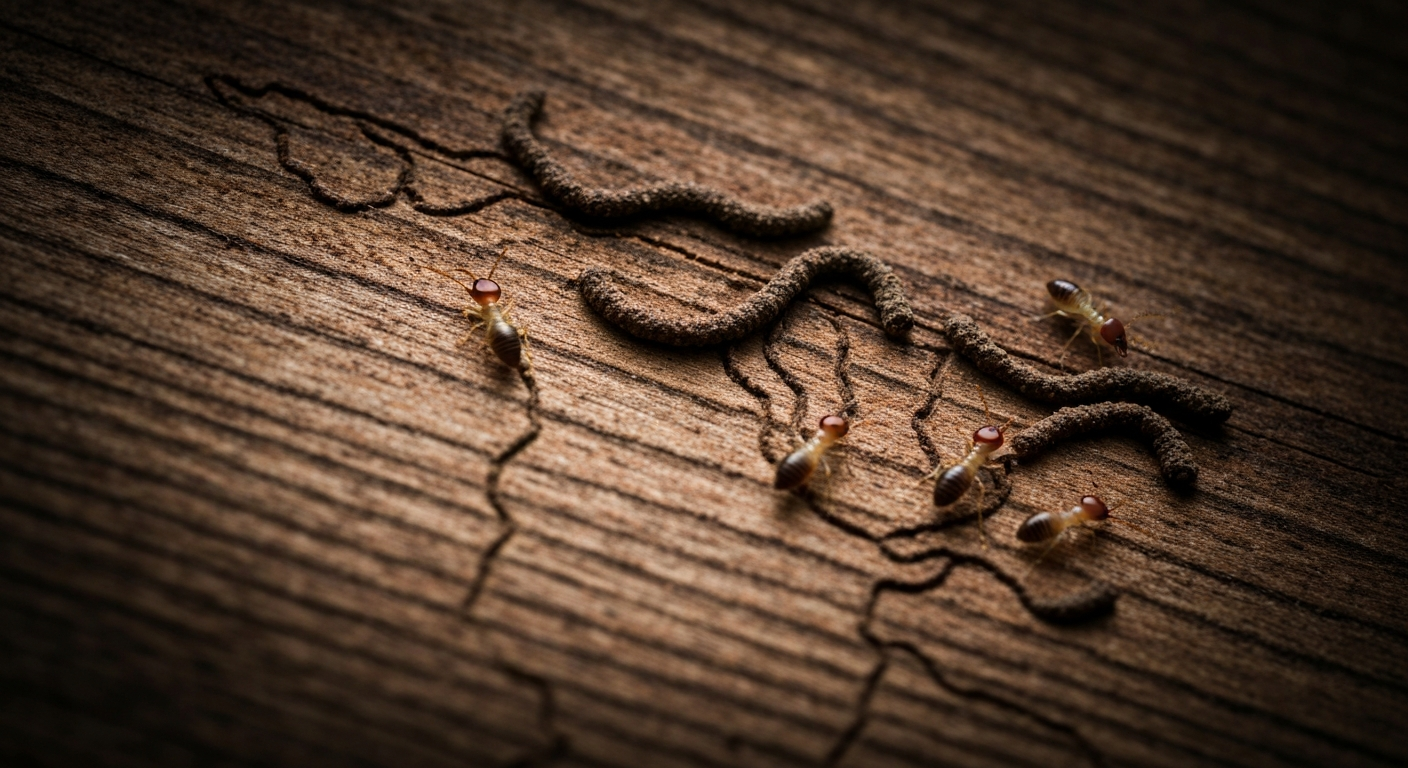
Termites in the Bay Area
Isoptera
Learn how to identify termites, understand the signs of an infestation, and know when professional inspection is needed.
What Are Termites?
Termites are wood-destroying insects that feed on cellulose, the main component of wood and plant fibers. In the Bay Area, subterranean and drywood termites are the most common culprits for structural damage.
Because they often work silently inside walls or underground, termite infestations can go unnoticed for years until significant damage is done. Regular inspections are critical for protecting your home.
Silent Destroyers
They can cause extensive damage before you even see them.
Cellulose Diet
They feed on wood, paper, and other cellulose materials.
Swarmers
Reproductive termites fly out to start new colonies, often mistaken for ants.
Costly Damage
Termites cause billions of dollars in property damage annually.
Termite Anatomy & Identification
Recognizing the distinct physical traits of termites is essential for early detection and preventing structural damage.
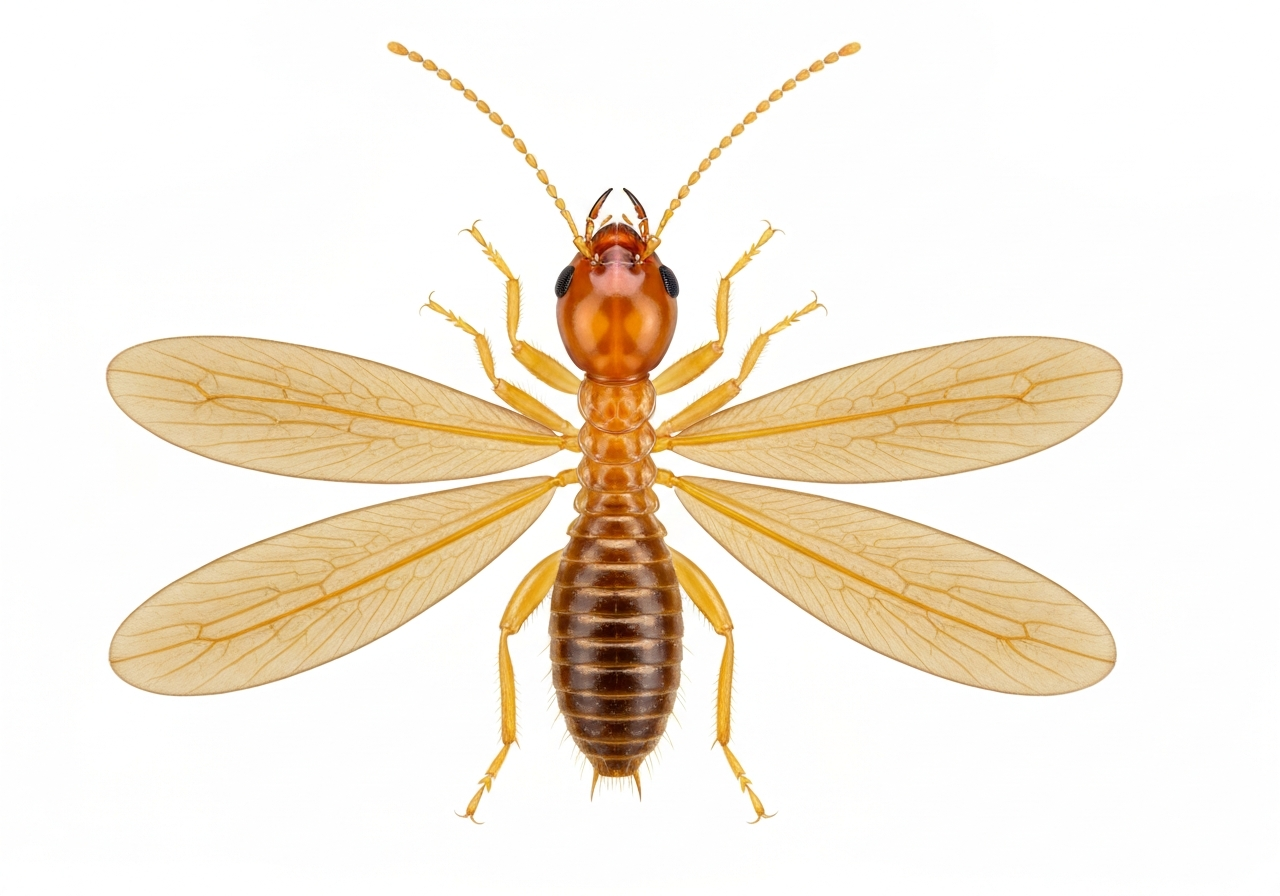
Straight Antennae
Unlike ants, termites have straight, bead-like antennae without a distinct "elbow" or bend.
Why this matters:
Mistaking termites for flying ants can delay critical treatments, leading to extensive and costly structural damage to your home.
Signs You May Have a Termite Problem
Discarded Wings
Finding shed wings near windowsills or doors after a swarm.
Mud Tubes
Pencil-sized tubes of mud on exterior walls or foundations.
Hollow Wood
Wood that sounds hollow when tapped or is easily punctured.
Frass (Termite Droppings)
Small piles of wood-colored pellets near woodwork.
Stuck Doors/Windows
Moisture from termite activity can warp frames.
Bubbling Paint
Paint that is peeling or bubbling, resembling water damage.
Suspect termite activity? Don't wait.
Early detection can save thousands in repair costs.
Schedule a Professional InspectionAre Termites Dangerous?
Severe Structural Damage
Termites eat wood from the inside out. They can compromise the structural integrity of a home, leading to sagging floors, weakened supports, and costly repairs.
Not Harmful to Humans
Termites do not bite, sting, or carry diseases that affect humans. Their primary threat is strictly to the property itself.
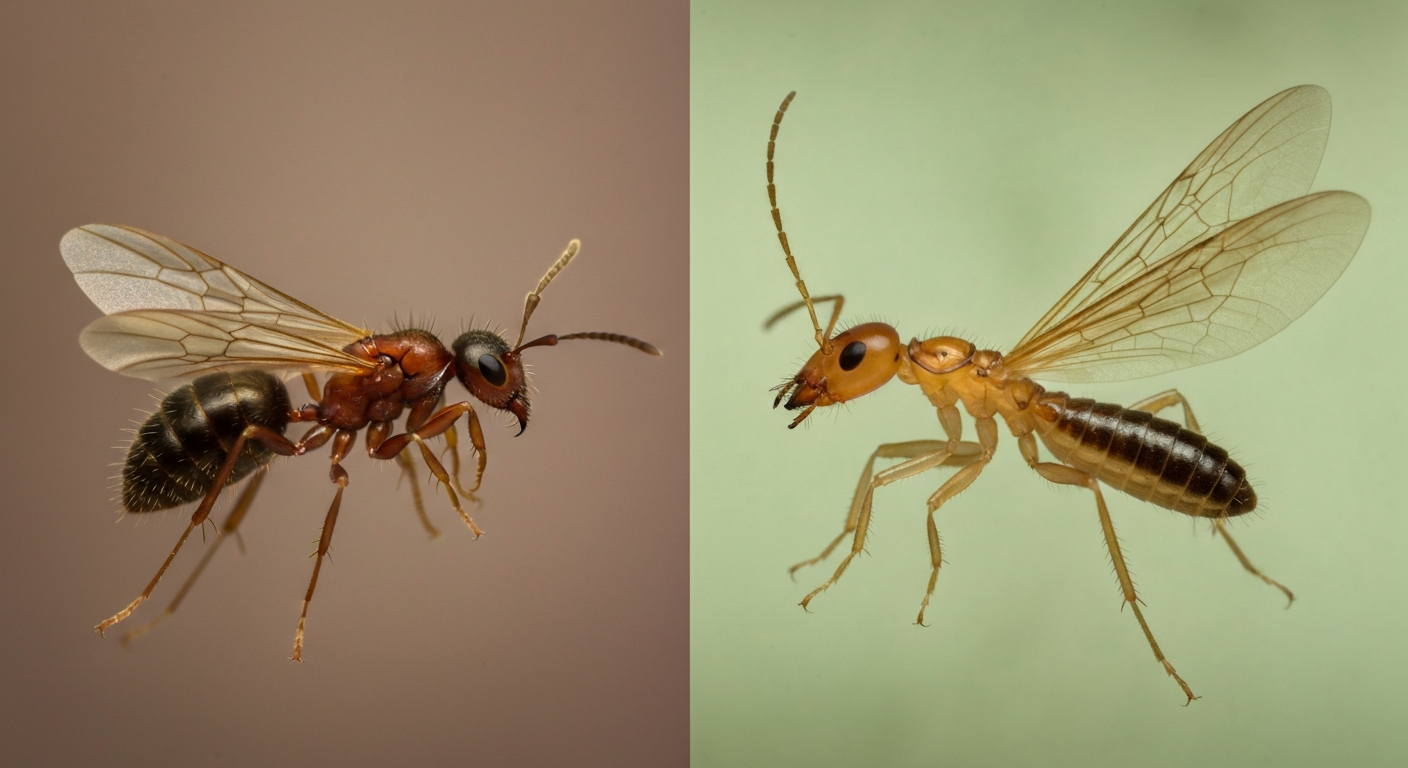
Termites vs. Ants: How To Tell The Difference
TFlying Termites
- Straight antennae (like tiny beads)
- Broad waist (thick body, no pinch)
- Equal-length wings (front and back same size)
- More uniform, cigar-shaped body
AFlying Ants
- Elbowed antennae (bent like an arm)
- Pinched waist (narrow connection between segments)
- Unequal wings (front wings longer than back wings)
- Three distinct body sections
How To Help Prevent Termites
Moisture Control
Wood Management
Protect Your Biggest Investment
Termites won't go away on their own. If you suspect an infestation, a professional inspection is the only way to know for sure.